
How to Choose the Right Foam Material for Industrial Die-Cutting in the Middle East
In the intricate landscape of Middle Eastern industrial manufacturing, die-cut foam components serve as the unsung heroes—ensuring sealing integrity, shock absorption, and thermal insulation across electronics, automotive, solar, and packaging sectors. The performance of these components, however, hinges entirely on one critical decision: selecting the right foam material. With diverse environmental conditions (from the high temperatures of Saudi Arabia to the humid coastal regions of the UAE) and strict industrial requirements, choosing incorrectly can lead to premature product failure, increased maintenance costs, and lost business opportunities. This guide breaks down the most common foam materials for industrial die-cutting, their core properties, and how to match them to your specific Middle Eastern application needs.
Understanding the Core Foam Types for Industrial Die-Cutting
Foam materials for die-cutting are categorized by their cell structure—open-cell or closed-cell—and their chemical composition, each offering unique advantages tailored to different industrial use cases. For Middle Eastern manufacturers and importers, the key is to prioritize materials that can withstand regional environmental stressors while delivering consistent performance. Below are the three most widely used foam materials, along with their strengths, limitations, and ideal applications in the Middle East.
1. EVA Foam: Versatile, Cost-Effective, and Adaptable
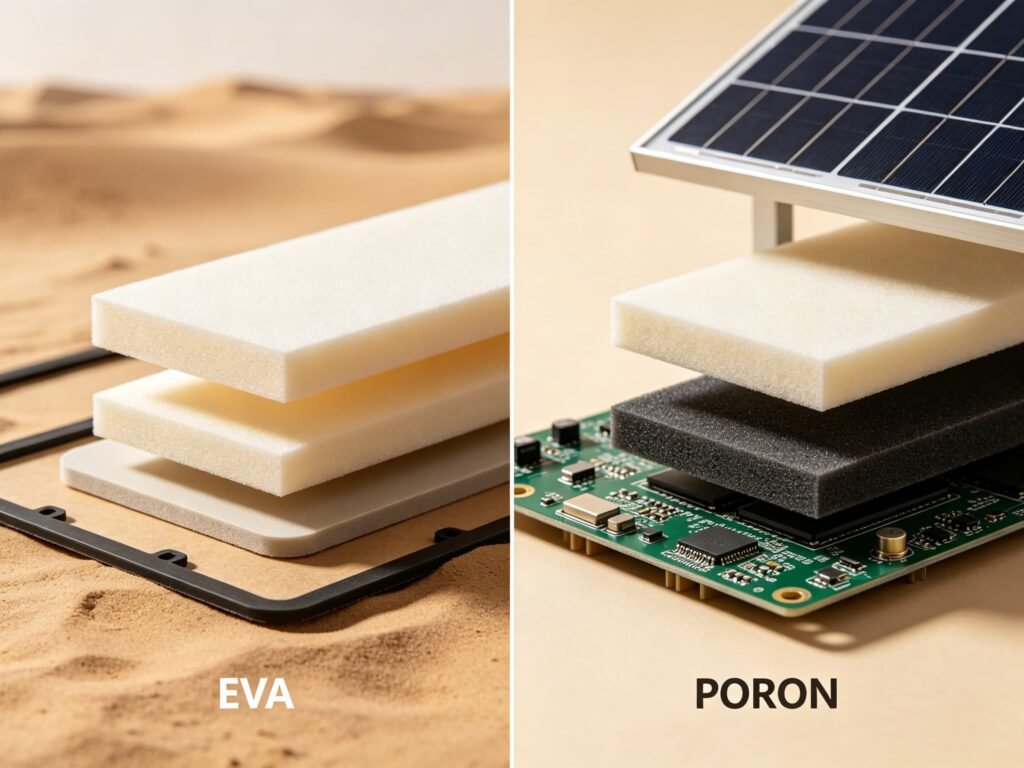
Ethylene-Vinyl Acetate (EVA) foam is a closed-cell foam known for its flexibility, impact resistance, and excellent moldability—making it a top choice for a wide range of industrial die-cut applications. Its closed-cell structure provides moderate water and moisture resistance, while its lightweight nature helps reduce the overall weight of finished products, a key advantage for automotive and electronics manufacturers in the Middle East.
Core properties of EVA foam for die-cutting include: – Flexibility and elasticity, even at low temperatures (down to -40°C), making it suitable for outdoor applications in cooler Middle Eastern regions like Jordan or Lebanon. – Resistance to UV radiation and moisture, critical for products exposed to the Middle East’s intense sunlight. – Easy die-cutting into intricate shapes, with clean edges and consistent thickness tolerance (0.43mm to 12.7mm), ideal for custom gaskets and seals. – Cost-effectiveness, making it a practical choice for high-volume production runs.
Ideal Middle Eastern applications: Automotive interior components (door seals, dashboard padding), electronics packaging, solar panel edge protection, and sports equipment. EVA foam is particularly popular among UAE and Saudi Arabian automotive manufacturers, as it balances performance and cost without compromising on durability.
2. PORON Foam: High-Performance Sealing and Shock Absorption
PORON foam is a premium microcellular urethane foam designed for high-demand industrial applications that require exceptional durability and performance. Unlike traditional foams, PORON features a dense, uniform cell structure that delivers superior compression set resistance—meaning it retains its shape even after years of repeated compression, a critical feature for long-lasting seals and gaskets.
Core properties of PORON foam for die-cutting include: – Excellent resistance to permanent deformation, ensuring long-term performance in high-stress applications. – High energy absorption and shock-damping capabilities, making it ideal for protecting delicate electronic components. – Low outgassing (no harmful chemicals or contaminants), meeting the strict environmental standards of Middle Eastern industrial sectors like aerospace and medical devices. – Temperature resistance ranging from -40°C to +90°C, adapting to the extreme temperature fluctuations across the Middle East. – Compatibility with adhesive backing, enabling easy installation in assembly lines.
Ideal Middle Eastern applications: Precision electronic gaskets, automotive sealing components, industrial machinery vibration dampeners, and medical device padding. PORON foam is favored by high-end manufacturers in Qatar and Kuwait, where product reliability and performance are non-negotiable.
3. PE Foam: Durable, Water-Resistant, and Cost-Efficient
Polyethylene (PE) foam is a closed-cell foam renowned for its durability, chemical resistance, and excellent shock absorption—making it a staple in industrial packaging and insulation applications. Available in cross-linked (XLPE) and expanded (EPE) variants, PE foam offers versatility that caters to diverse Middle Eastern industrial needs.
Core properties of PE foam for die-cutting include: – Superior water and moisture resistance, making it ideal for coastal Middle Eastern regions (e.g., Dubai, Bahrain) where humidity is high. – Chemical resistance to oils, solvents, and harsh industrial cleaners, ensuring longevity in manufacturing environments. – Lightweight yet rigid, providing robust protection for fragile components during shipping and storage. – Easy die-cutting into custom shapes and sizes, with minimal material waste—reducing production costs for bulk orders.
Ideal Middle Eastern applications: Industrial packaging (hardware, scientific equipment), thermal insulation for HVAC systems, water-resistant seals for marine equipment, and shock-absorbing padding for heavy machinery. PE foam is widely used by Middle Eastern import-export businesses, as it balances durability and cost-effectiveness for large-scale shipments.
Key Factors to Consider When Choosing Foam for Middle Eastern Applications
Selecting the right foam material goes beyond understanding individual properties—it requires aligning the material’s strengths with your specific application, environmental conditions, and performance goals. For Middle Eastern industrial buyers and manufacturers, these four factors are non-negotiable:
1. Environmental Conditions
The Middle East’s extreme climate—high temperatures, intense UV radiation, and varying humidity levels—demands foam materials that can withstand these stressors. Closed-cell foams (EVA, PE, PORON) are generally preferred over open-cell foams, as they resist moisture and UV damage better. For outdoor applications (e.g., solar panels, outdoor machinery), prioritize materials with UV resistance (EVA, PORON) to prevent degradation over time.
2. Application Requirements
Define the core function of your die-cut component: – Sealing: Choose closed-cell foams (PORON, PE) for superior moisture and gas barrier properties. – Shock absorption: Opt for PORON or high-density EVA for maximum energy absorption. – Insulation: PE foam or cross-linked EVA are ideal for thermal and acoustic insulation. – Cost: EVA or PE foam are more budget-friendly for high-volume, non-critical applications; PORON is better for high-performance, precision needs.
3. Die-Cutting Precision
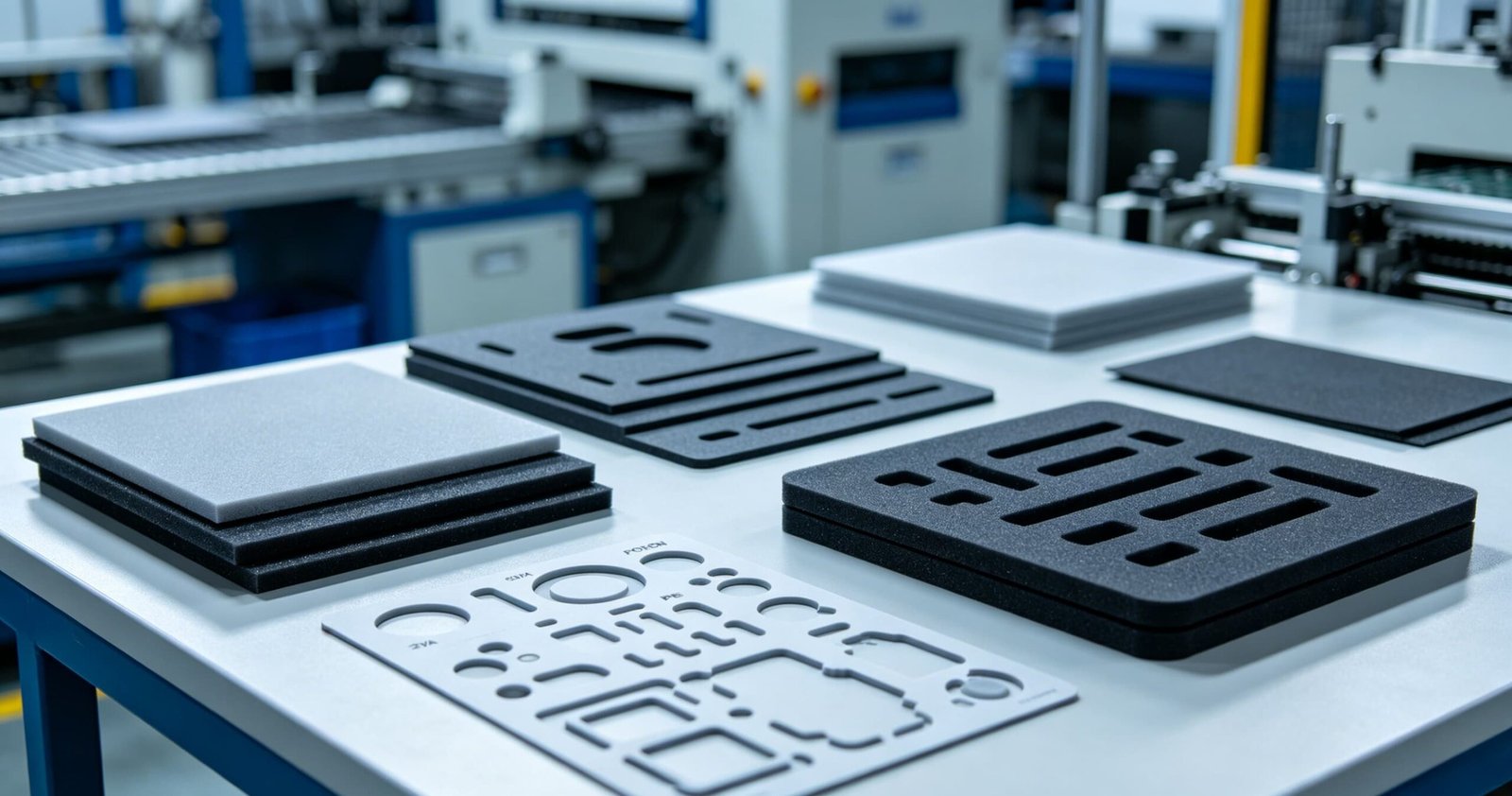
Industrial die-cutting requires materials that can be cut into intricate shapes with clean edges and consistent thickness. All three foam types (EVA, PORON, PE) are suitable for die-cutting, but PORON and high-density EVA offer the tightest tolerances—critical for precision components like electronic gaskets or automotive seals. For complex shapes, work with a die-cutting partner that uses advanced flatbed or rotary die-cutting equipment to ensure accuracy.
4. Compliance and Certifications
Middle Eastern industrial sectors (e.g., automotive, medical, aerospace) often require compliance with international standards (ISO, RoHS) to ensure product safety and quality. PORON and high-grade EVA/PE foams meet these standards, with low outgassing and non-toxic properties—essential for applications in sensitive industries.
Why Partnering with a Professional Die-Cutting Factory Matters
Even with the right material selection, the quality of die-cutting directly impacts the performance of your foam components. A professional die-cutting factory with experience in Middle Eastern markets can: – Provide material expertise, helping you select the optimal foam for your specific application. – Utilize advanced die-cutting technologies (flatbed, rotary, waterjet) to ensure precision and consistency. – Offer custom solutions, including adhesive backing and lamination, to streamline your assembly process. – Ensure timely delivery to Middle Eastern ports, with a deep understanding of regional logistics and customs requirements.
Final Thoughts
Choosing the right foam material for industrial die-cutting in the Middle East is a balance of performance, durability, and cost. EVA foam offers versatility and affordability for most applications, PORON delivers premium performance for high-demand use cases, and PE foam excels in water resistance and packaging. By prioritizing environmental adaptability, application requirements, and precision die-cutting, you can ensure your foam components meet the strict standards of Middle Eastern industrial markets.
For custom die-cut foam solutions tailored to the Middle East’s unique needs—from material selection to precision cutting and timely delivery—partner with a trusted factory that understands both the technical aspects of die-cutting and the regional market demands. With the right material and a reliable partner, your die-cut foam components will deliver consistent performance, reduce maintenance costs, and drive long-term business success.