

EVA Pad Engineering Handbook: Performance, Applications, and Material Science
Material Fundamentals
Chemical Architecture
Ethylene Vinyl Acetate (EVA) copolymers represent a unique class of closed-cell foams where vinyl acetate content (typically 10%-28%) directly dictates flexibility and softness. The cellular structure is achieved through physical foaming processes, creating a matrix of interconnected closed cells that provide exceptional energy absorption characteristics.
Performance Matrix
| Property | Technical Specification | Engineering Significance |
|---|---|---|
| Density Range | 0.03-0.25 g/cm³ | Weight optimization for applications |
| Hardness Scale | Shore C 15-80 | Customizable compression resistance |
| Temperature Stability | -50°C to 80°C | Environmental performance range |
| Compression Set | <15% @22h/70°C | Long-term structural integrity |
| Water Absorption | <1% @24h immersion | Hydrophobic performance |
| Tear Strength | 3-8 kN/m | Mechanical durability index |
View Product: EVA Pad
Advanced Material Variants
Cross-Linked EVA
- Peroxide or silane cross-linking enhances molecular bonding
- Improves compression set by 40% compared to non-cross-linked versions
- Superior resilience for dynamic loading applications
Engineered Composite EVA
- Fiber-reinforced variants for structural applications
- Hybrid compositions with rubber for enhanced elasticity
- Filler-modified versions for specific gravity adjustment
Application Engineering
Electronics Packaging
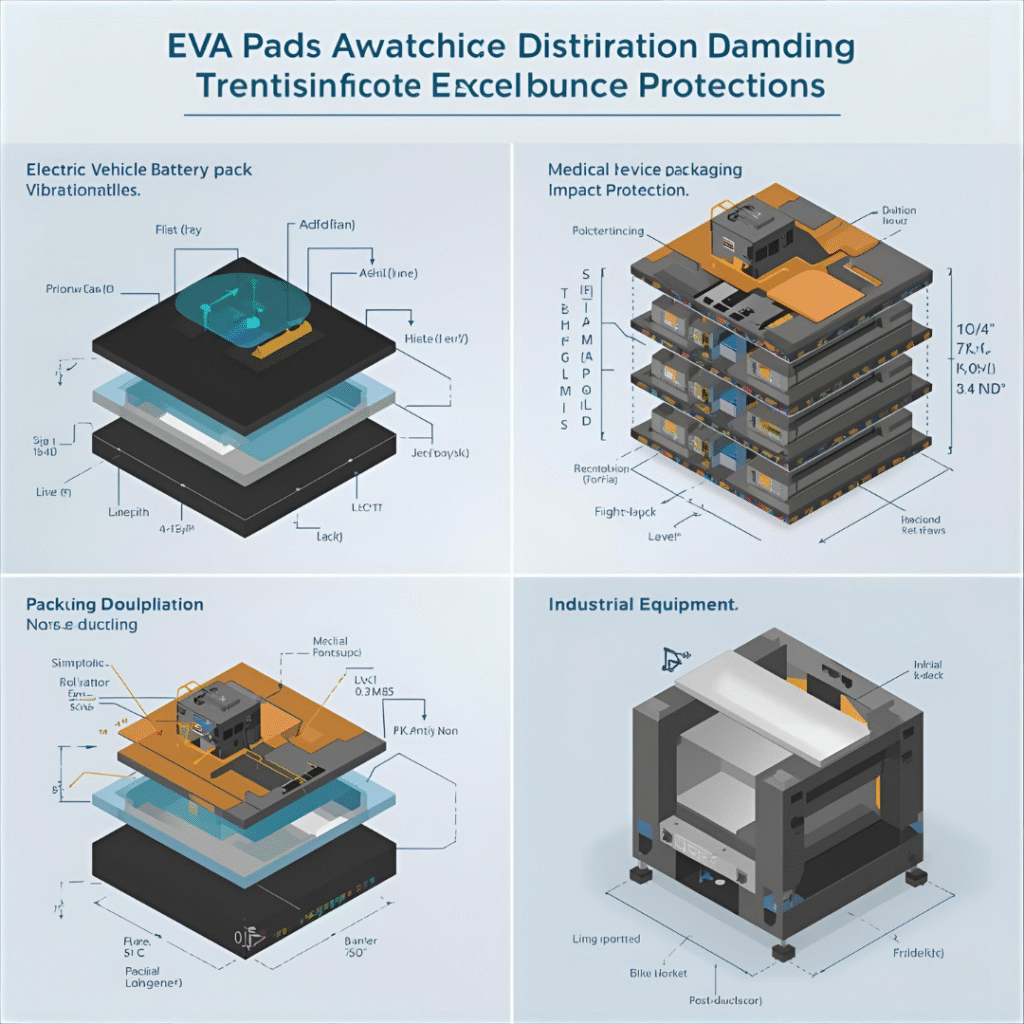
- Custom-molded EVA inserts for sensitive component protection
- Anti-static formulations (10^6-10^9 Ω surface resistance)
- Vibration damping for transportation and handling
Automotive Systems
- Battery module cushioning with thermal management properties
- Interior trim components requiring energy absorption
- Sealing gaskets with environmental resistance
Medical Equipment
- Patient positioning pads with biocompatible certifications
- Equipment vibration isolation for precision instruments
- Sterilizable versions for surgical applications
Manufacturing Technology
Compression Molding
- High-pressure formation for consistent cell structure
- Minimum thickness: 1.5mm with ±0.2mm tolerance
- Maximum dimensions: 2000x1000mm press capacity
Continuous Lamination
- Multi-layer composites with adhesive systems
- In-line quality monitoring for thickness control
- Custom surface textures and embossing patterns
Quality Assurance
- IATF 16949 compliance for automotive applications
- ISO 13485 certification for medical devices
- UL 94 HF-1 flammability ratings
- RoHS and REACH environmental compliance
Technical Selection Guide
For impact absorption: Choose lower density (0.03-0.10 g/cm³) with high rebound
For structural support: Select higher density (0.15-0.25 g/cm³) with cross-linking
For environmental resistance: Specify closed-cell content >90%
For cost-sensitive applications: Consider non-cross-linked formulations
Products by Category
-

3.0mm Self-Adhesive EVA Foam Tape – Highly Elastic Anti-Slip Gaskets for Secure Mounting
-
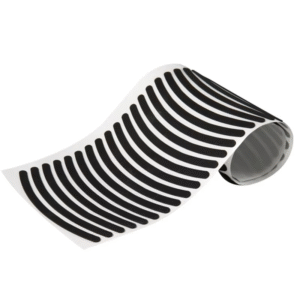
Custom Anti-Slip EVA Foam Pads – Multi-Shape Shock Absorption with Strong Adhesive Backing
-
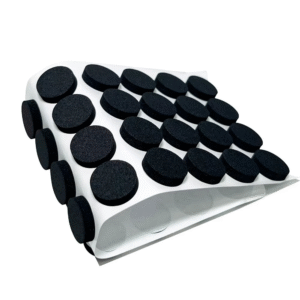
Custom Die-Cut Black EVA Foam Tape – Single-Sided Adhesive Pads for Industrial Applications
-
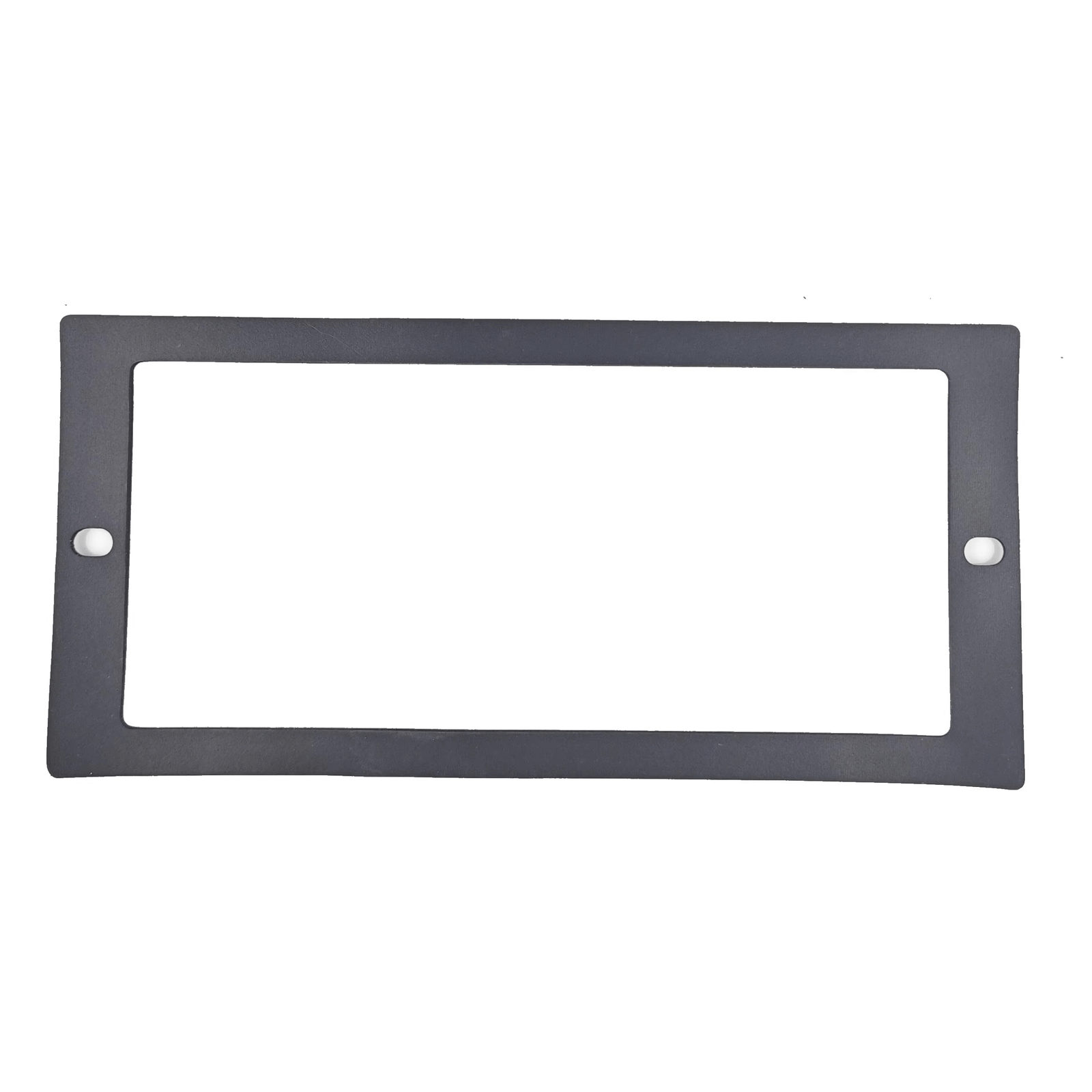
Custom Die-Cut Conductive & Specialty Foam Gaskets – Multi-Material Solutions with Acrylic Adhesive
-
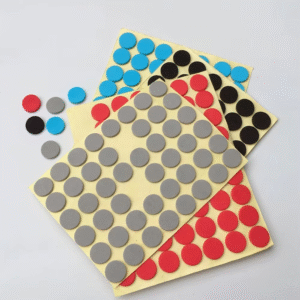
Custom Double-Sided EVA Foam Tape – Precision Die-Cut Gaskets with High Adhesion for Industrial Sealing
-
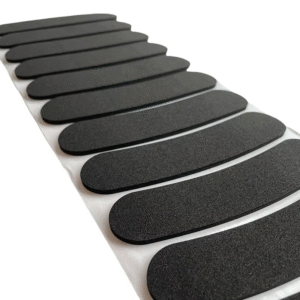
Custom EVA Foam Gaskets – Self-Adhesive Sealing Pads for Industrial & DIY Applications