

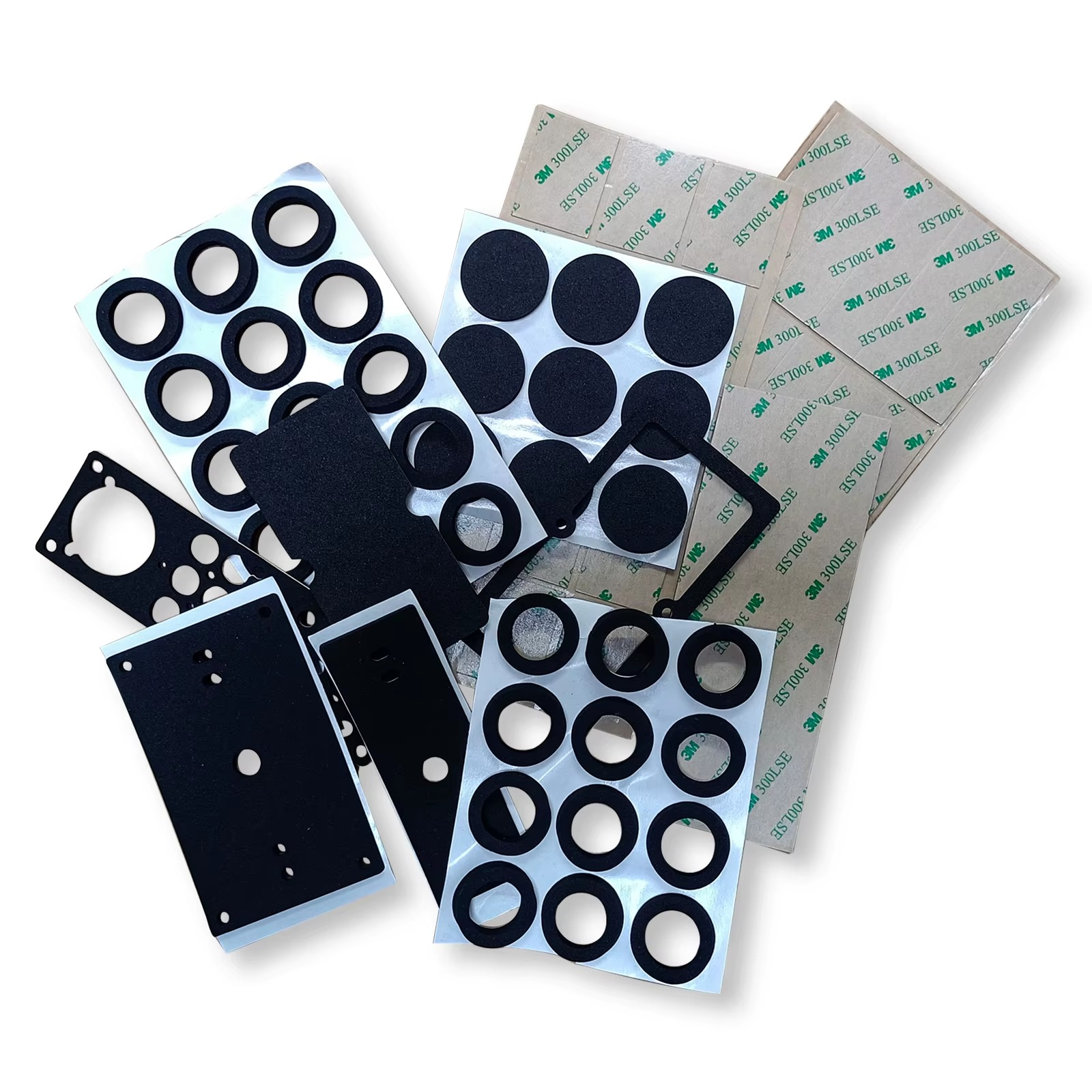
Heat is the silent killer of modern electronics. As devices get smaller and more powerful, managing thermal loads becomes the critical challenge between optimal performance and premature failure. ✨ This is where precision die-cut Thermal Interface Materials (TIMs) emerge as unsung heroes in thermal management systems.
🔥 The Thermal Bottleneck Problem
Every electronic system faces a fundamental challenge: air is an excellent insulator. Microscopic air gaps between a heat-generating component (like a CPU or power IC) and a heat sink create significant thermal resistance. These tiny air pockets can cause temperature spikes of 20-50°C—enough to degrade performance and shorten product lifespan.
Die-cut TIMs solve this by filling these imperfect surfaces with materials far more conductive than air, creating an efficient heat transfer path.
📊 The TIM Spectrum: Choosing Your Thermal Champion
Selecting the right thermal interface material requires balancing thermal performance, application pressure, and cost.
| Material Type | Thermal Conductivity | Key Advantage | Ideal Application |
|---|---|---|---|
| Thermal Grease | 3-5 W/mK | Lowest thermal resistance | High-performance computing |
| Gap Filler Pads | 1-8 W/mK | Fills large uneven gaps | EV battery packs, power supplies |
| Graphite Sheets | 150-400 W/mK (in-plane) | Ultra-thin, lightweight | Smartphones, tablets |
| Phase Change Materials | 2-5 W/mK | Conforms under low pressure | Automotive electronics |
➡️ Pro Insight: For high-power LED applications, a silicon-free thermal pad prevents contamination and maintains light output. In ultra-thin consumer electronics, graphite thermal sheets provide exceptional planar spreading in minimal space.
⚙️ Why Precision Die-Cutting Matters for TIM Performance
While material selection is crucial, precision conversion through die-cutting unlocks maximum performance:
- Perfect Component Fit: Laser-cut thermal pads ensure exact coverage of heat sources while avoiding nearby sensitive components
- Adhesive Integration: Pre-applied thermal tape allows for clean, secure mounting without messy grease application
- Thickness Control: Maintaining ±0.1mm tolerance ensures optimal pressure distribution across the entire interface
- Contamination Prevention: Clean-room die-cutting of non-silicone thermal materials prevents particle contamination in sensitive optics
🚀 Advanced TIM Applications: Beyond Basic Cooling
Today’s thermal management solutions go beyond simple processor cooling:
- 5G Infrastructure: Die-cut EMI absorbing materials with thermal properties manage both heat and signal integrity
- Electric Vehicles: Thermal gap fillers in battery packs ensure uniform temperature distribution across cells
- Wearable Devices: Ultra-soft thermal interface materials provide both comfort and heat spreading in compact spaces
Explore our thermal management material portfolio: [Link to Thermal Category – https://diecutchina.com/offerings/]
💡 The Future of Thermal Management
The evolution of electronics thermal solutions continues toward:
- Higher conductivity with lower application pressure
- Multi-functional materials that provide EMI shielding and thermal transfer
- Sustainable TIMs with reduced environmental impact
❄️ Ready to Solve Your Thermal Challenges?
Don’t let thermal limitations constrain your design. Our engineers specialize in selecting and converting the perfect thermal interface material for your specific application requirements.
➡️ Submit your thermal challenge for a FREE material recommendation and DFM analysis. We’ll help you keep your cool—literally.
📧 Contact Us for Thermal Management Solutions & Prototyping!
Beat the heat with precision thermal solutions.
[Link to Contact Page – https://diecutchina.com/contact/]
Keywords Integrated: die-cut thermal interface materials, thermal interface material, thermal pads, graphite sheets, electronics cooling, thermal management, precision die-cut, TIM solutions, thermal gap fillers, phase change materials, thermal conductivity, laser-cut thermal pads, silicon-free thermal pad, EMI absorbing materials, electronics thermal solutions.