

Silicone Pad Material Science: Engineering Excellence for Demanding Applications
Material Fundamentals & Chemistry
Silicone pads are engineered from high-purity polydimethylsiloxane (PDMS) polymers, reinforced with silica fillers and customized through platinum or peroxide cure systems. The molecular structure provides unique properties that organic elastomers cannot match.
Key Material Properties:
| Property | Value Range | Significance |
|---|---|---|
| Operating Temperature | -60°C to 230°C | Extreme environment capability |
| Hardness Range | Shore A 10-80 | Customizable softness to rigidity |
| Compression Set | <10% (22h/175°C) | Long-term performance retention |
| Tear Strength | 10-50 kN/m | Durability under stress |
| Dielectric Strength | 15-25 kV/mm | Electrical insulation properties |
Advanced Material Formulations
High-Temperature Variants
- Phenyl-modified silicones for 300°C continuous service
- Ceramic-filled compositions for thermal management
- Low volatile content for clean room applications
Specialty Compounds
- Conductive formulations (10^3-10^6 Ω-cm) for ESD protection
- Thermally conductive versions (1.5-3.0 W/m·K) for heat dissipation
- FDA-compliant grades for food and medical contact
Performance Engineering
Mechanical Behavior
Recovery rate >90% after deformation
Viscoelastic response for vibration damping
Stress relaxation <15% under constant compression
Environmental Resistance
- UV stability: >1000 hours weatherometer testing
- Ozone resistance: Infinite under typical conditions
- Chemical inertness: Resists oils, solvents, and acids
Application-Specific Engineering
Electronics Thermal Management
- Gap filler pads with thermal impedance <0.5°C-in²/W
- Phase change materials for improved interface performance
- Electrically insulating thermal pads for power devices
Automotive Systems
- Engine compartment seals withstandting 150°C continuous
- Battery thermal interface materials with flame retardancy
- Vibration damping mounts for sensors and controllers
Medical Devices
- Biocompatible grades (ISO 10993 Class VI)
- Autoclavable formulations for sterilization
- Ultrasound transparency for imaging applications
Manufacturing Technology
Precision Fabrication
- Laser cutting tolerance: ±0.05mm
- Compression molding for complex 3D shapes
- Adhesive integration for permanent bonding
Quality Systems
- ISO 9001:2015 certified production
- UL 94 V-0 flammability compliance
- RoHS and REACH environmental compliance
- ITAR registration for defense applications
Selection Methodology
For thermal applications: Consider thermal conductivity and impedance
For sealing applications: Evaluate compression set and stress relaxation
For medical use: Verify biocompatibility certifications
For outdoor applications: Ensure UV and ozone resistance
Products by Category
-
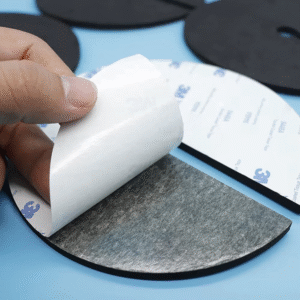
Anti-Shock & Anti-Slip EVA Rubber Pads – Single/Double-Sided Adhesive Solutions from Manufacturer
-
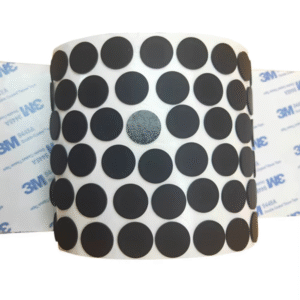
Anti-Slip Silicone Pads – Die-Cut Self-Adhesive Feet for Household & Electronics
-
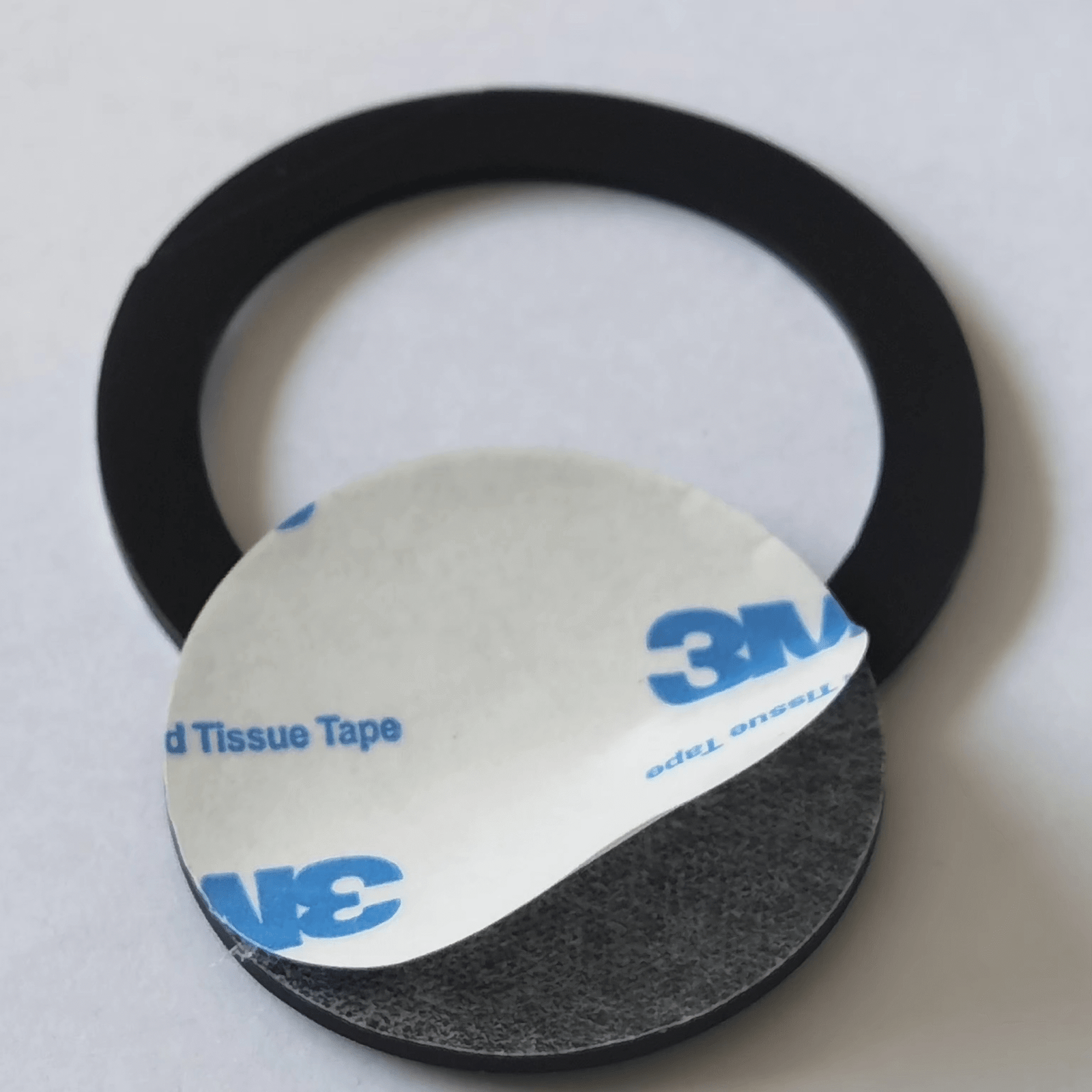
Custom Adhesive-Backed Seals – Single-Sided Silicone/NBR/SBR/EPDM Washers for Industrial Applications
-
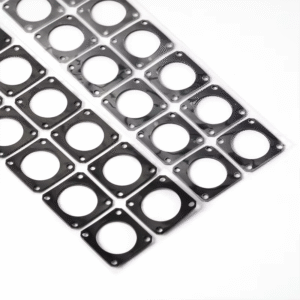
Custom Clear Silicone Gaskets – Die-Cut Thermal Conductive Pads with Non-Slip Grid Surface
-
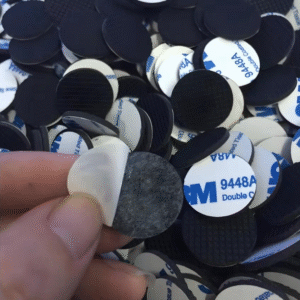
Custom Die-Cut Anti-Skid Pads – Multi-Surface Rubber & Silicone Solutions for Home, Auto & Industry
-
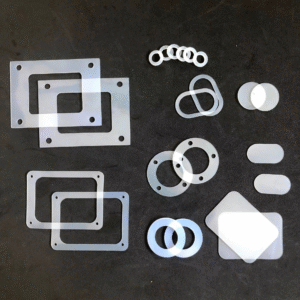
Custom Die-Cut Anti-Slip Pads – Adhesive Backed Rubber & Silicone Bumpers for Secure Mounting